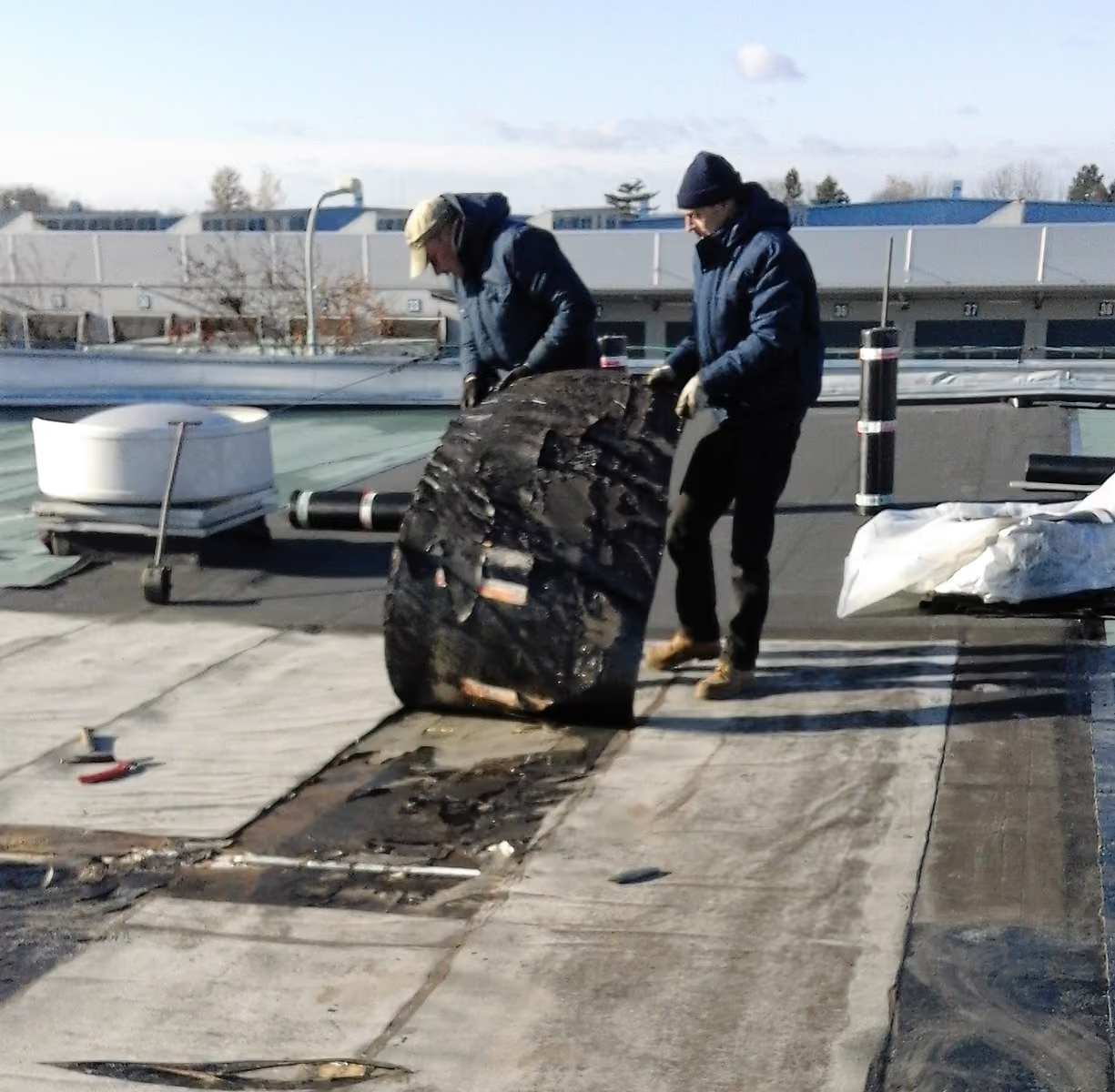
Our facility manager's experience preparing, selecting, and carrying out the repair of a roof spanning more than 10,000 m², based on its condition and the choice of technology.
In the summer of 2017, leaks began appearing through the roof of the park's main building. The problem needed to be addressed immediately. Below, we summarise what we learned and how we solved it.
The problem
The roof membrane on the warehouse hall, covering a total area of 10,500 m², was more than 40 years old and had never been repaired across its full surface. Over the years, leak points had only been patched in small areas using cheap materials and, more importantly, a mix of technologies that shouldn't be combined. As a result, it kept cracking under the effects of weather. It should also be noted that the surface layer of the roof membrane wasn't made of materials resistant to sunlight and other exposure — those materials were only used as an underlay. In addition, the rainwater drains were damaged and had clearly seen better days.
Keep patching, or invest in a more costly repair?
We consulted several experts about the possible solutions.
Independently of one another, they proposed two options.
Option A – continue patching the way the previous owner had. This would truly be never-ending, and fairly unsatisfactory for tenants leasing the warehouse, since the problem would always be treated as an emergency — that is, dealt with only once it occurred, which is barely possible in winter due to the weather.
Option B – make a larger investment in a full roof repair using new technologies, covering the existing roofing with a modified bitumen membrane or PVC foil. Since our company always favours a logical, long-term solution, this option won out unanimously.
Bitumen vs. PVC?
The last decision before implementation was choosing the most suitable repair technology. Recommendations for each were evenly balanced, so the decision was ours to make. It was important to weigh all the pros and cons:
Modified bitumen membrane with mineral granules: the advantages were cost, the fact that 80% of the original roofing was a bitumen underlay, and a trouble-free walkable surface; the disadvantage was significantly greater weight — there was already plenty of roofing material on the roof.
PVC foil: the advantage was lower weight; the disadvantages were a roughly 25% higher price, lower wind resistance, and the need for mechanical anchoring, which means drilling into the roof's load-bearing structure.
We were more drawn to the bitumen roofing, but needed to calculate whether weight would be an issue. A structural engineer's calculations showed it shouldn't be a problem. What's more, while PVC foil places less weight on the roof structure, it requires drilling anchors into it, which we wanted to avoid. So bitumen won out.
Implementation
We selected a company specialising primarily in bitumen roofing, with experience on similarly older industrial buildings like Emporium Ruzyně.
After finding that half of the roof wasn't in as poor a condition, and given that the roof is divided by a central parapet — effectively making it two separate roofs — we decided to repair half the roof in 2017, covering 5,250 m². The whole job was completed within a month, including replacement of the old drains.
Conclusion
We've now been through our first winter under the new roof, and so far we're very satisfied. After winter, we'll assess its condition, and if the roof holds up as well as it has so far, we'll most likely tackle the second half in 2018 to complete the job.

Interested?
Get in touch.
We would be happy to show you available units and prepare a tailored offer for you.